

How to Improve Livestock Weighing Accuracy

Accuracy when weighing livestock is critical, as it is essential for ensuring the correct feeding of animals, accurate nutritional management and medication dosages, as well as the governance of your breeding programmes and the market value of your livestock. Plus, this is often key to ensuring regulatory compliance, too.
As a result, weighing livestock is a process which requires the highest possible degree of precision.
Thankfully, there are a number of simple (yet effective) approaches that you can take, to minimise the risk of any errors or inaccuracies.
Keep reading to find our experts’ insights into increasing your livestock weighing accuracy, and the four best ways to achieve more reliable readings.
Maintain your weighing scales
Regularly maintaining your weighing scales is one of the most effective ways to increase the accuracy of your readings.
When designing your weighing scale maintenance schedule, you will need to include the following:
- A regular calibration plan – see the manufacturer’s recommendations, to determine how often this will need to take place.
- A regular cleaning plan – this should include the regular removal of any dust, debris, mud and any other contaminants. You will also need to regularly wipe down the surface of the scale.
- Regular inspections of the equipment – this should include inspections of the display units or interfaces, cables and load cells. These inspections should be conducted by a trained, experienced specialist.
- Training on best practice – ensure that your team is well-versed in best practices for using the equipment. For example, they should know that, if there is a high volume spillage on the equipment, it should be cleaned up immediately.
- Training on how to spot errors – your team should also be trained about how to spot any errors in the readings, and any warning signs that there may be a fault.
- Consideration of the equipment’s location – the scales should be kept in an environment with a stable temperature, consistent humidity levels, and a level surface.
We also recommend that you keep a copy of all the documentation associated with your scales, including details of any replacement parts, and notes from any professional inspections or maintenance services.
You should also record the dates of your calibrations, inspections and any repairs.
Minimise stress for your livestock
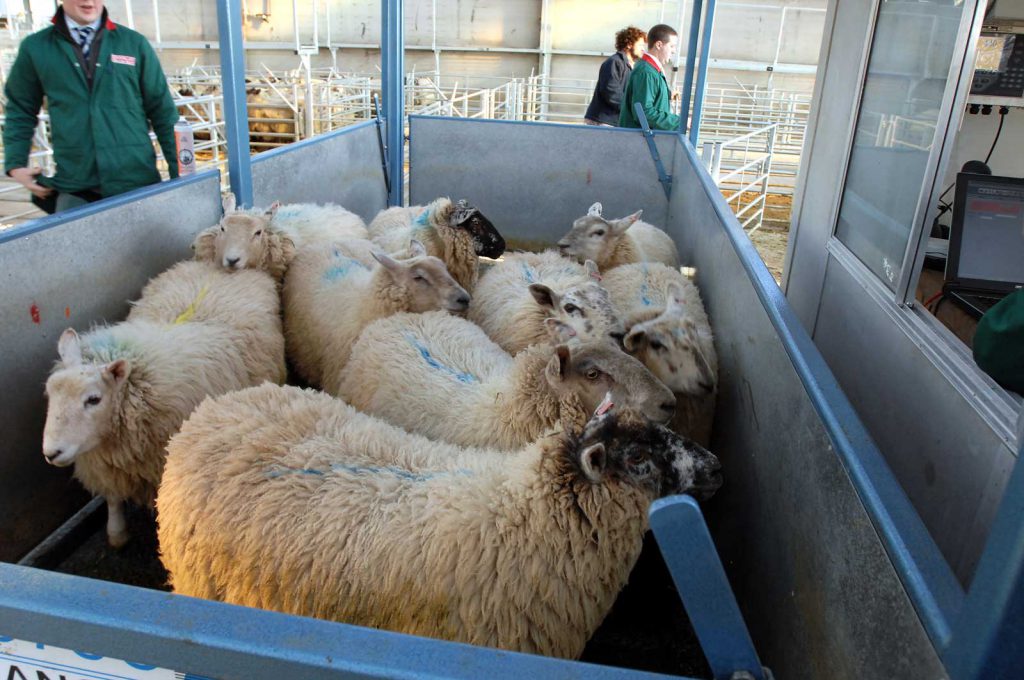
Another of the most common causes of inaccuracies in weighing is the behaviour of the livestock. If the animals feel stressed or nervous, they are more likely to move around. This can impact the reading, and cause imprecise results.
You can reduce movements and minimise the stress of your livestock by:
- Ensuring that the animals are calm before you start weighing
- Keeping the animals comfortable
- Using chutes or enclosures to keep the animals still
- Conducting the weighings multiple times, then calculating the average
- Ensuring that there are no distractions or loud noises
- Training your staff, so that they can conduct the process carefully and gently
- Using food to encourage them to get on the scales
- Using familiar handlers, where possible
Check for debris or interference
If they go unnoticed, debris and signal interference can also disrupt the reading of your scales.
So, firstly, you need to ensure that you regularly check for any debris within your weighing scales. Your scales should be cleaned regularly, and any dirt, dust or other debris removed.
Secondly, you should regularly calibrate your scale and verify its accuracy. You can do this by using known reference weights, and then comparing them against the reading provided. If there is an issue with the reading, due to some unknown interference, then you should enlist the help of a specialist.
Choosing the right weighing scale
Finally, remember that weighing scales are available in a wide range of sizes, varieties and intended use cases.
So, one of the best ways to ensure that you consistently get the most accurate reading possible, is simply to ensure that you select the best weighing scale for your livestock.
When it comes to choosing the right weighing scale, your scale needs to be of an appropriate size, weight capacity and accuracy, for the livestock that you intend to weigh.
At Parkerfarm, we offer a variety of animal and livestock weighing scales, which are designed to cater to a wide range of different use cases.
This includes Cattle Scales, Pig Scales , Poultry Scales and Sheep scales.
If you have any further questions about Livestock weighing best practices, or if you would like to arrange the supply and installation of one of our premium weighing solutions, don’t hesitate to get in touch.

Parker Farm @ The Croptec Show 2023 & LAMMA 2024
We’ve got a busy calendar over the next few months! The Parker Farm team is delighted to be attending two of the sector’s leading trade shows – CropTech 2023 and […]
Coronavirus Update
Parkefarm is committed to the well-being of our customers, which is why we’re following NHS guidelines to keep you and our team as safe as possible during this difficult time. […]
Parkerfarm Weighing Systems Look Forward to Seeing You at Lamma 2019 in Birmingham
On Tuesday the 8th and Wednesday the 9th of January Parkerfarm will be exhibiting at Lamma 2019 in Hall 18, Stand 18.704. Lamma is the largest farm machinery equipment and […]